The oldest dated Khmer inscription
A stone inscription found at Angkor Borei, in today's Takéo Province south of Phnom Penh, is dated 611. It is the oldest dated text written in the Khmer language, from the time of the kingdom of Chenla.
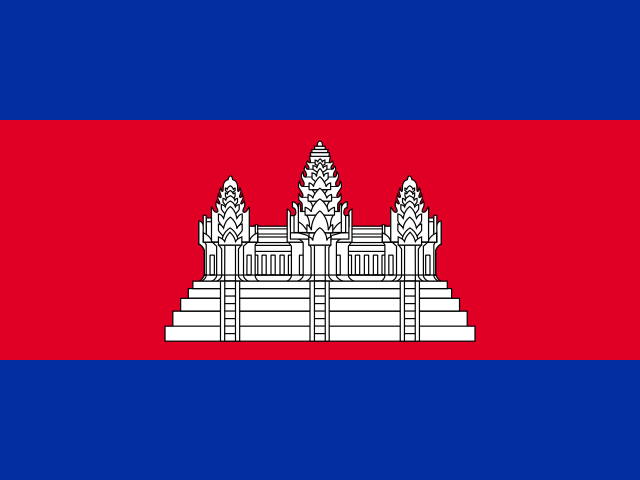
Cambodia lies between Thailand, Laos and Vietnam, with a short coast on the Gulf of Thailand. Most of the country is a low, flat plain of rice fields around the Tonlé Sap, the largest freshwater lake in Southeast Asia, and the Mekong River, which crosses the east of the country from north to south. Forested hills and mountains rise along the edges, and the highest peak, Phnom Aural, stands in the Cardamom Mountains in the southwest.
From the 9th to the 15th century this was the heart of the Khmer Empire, whose kings built Angkor Wat and hundreds of other stone temples. Later centuries brought pressure from Siam and Vietnam, and France ruled the country as a protectorate from 1863 until independence in 1953. Between 1975 and 1979 the Khmer Rouge regime caused the deaths of about 2 million people, roughly a quarter of the population, by a commonly cited estimate. Peace returned slowly after the Paris agreements of 1991 and a United Nations mission, and the monarchy was restored in 1993.
Memories fade faster than photos. Ask these over a meal or a phone call, and write the answers down.
Chinese records describe a trading kingdom called Funan on the lower Mekong from about the 1st century AD, followed by the kingdom of Chenla. From 802 the Khmer Empire, soon centred on Angkor, at its height controlled much of mainland Southeast Asia. After Angkor was abandoned the kingdom grew weaker between Siam and Vietnam, until France made it a protectorate. The 20th century brought independence, civil war, the Khmer Rouge regime and, after 1991, a slow return to peace.
A stone inscription found at Angkor Borei, in today's Takéo Province south of Phnom Penh, is dated 611. It is the oldest dated text written in the Khmer language, from the time of the kingdom of Chenla.
King Suryavarman II ruled from 1113 to about 1150, one of the most powerful periods of the empire. During his reign Angkor Wat was built as a Hindu temple dedicated to the god Vishnu.
The Chinese envoy Zhou Daguan arrived at Angkor in August 1296 and stayed for about a year. His account of daily life, markets, festivals and the royal court is the most detailed eyewitness description of Angkor that survives.
Longvek, the royal capital of the 16th century and a busy trading town, was captured by Siamese forces in 1594. For the next two centuries Cambodia was often squeezed between the growing powers of Siam and Vietnam.
After a campaign led by the young King Norodom Sihanouk, Cambodia became fully independent on 9 November 1953, which is still celebrated as Independence Day.
Vietnamese forces, joined by Cambodian opponents of the regime, captured Phnom Penh on 7 January 1979 and ended Khmer Rouge rule. Fighting with Khmer Rouge forces in the border regions went on for many years.
After the UN-organised election in May 1993, a new constitution made Cambodia a constitutional monarchy again, and Norodom Sihanouk returned to the throne in September 1993.
UNESCO listed three places of Khmer Rouge repression, the Tuol Sleng and M-13 prisons and the Choeung Ek killing field, as the Cambodian Memorial Sites. They are kept as places of remembrance, learning and reflection.
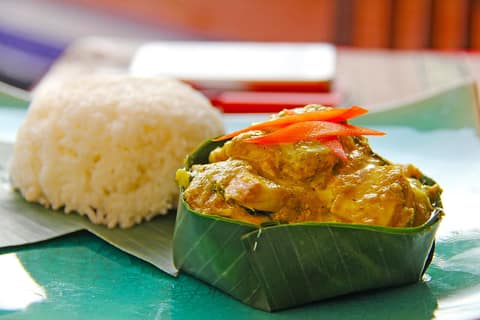
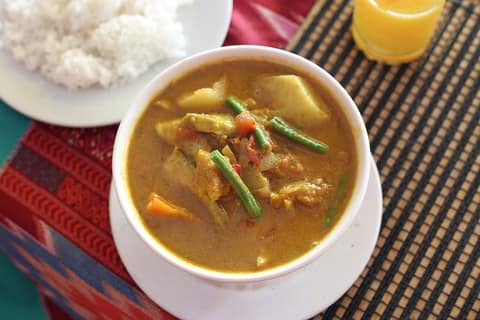
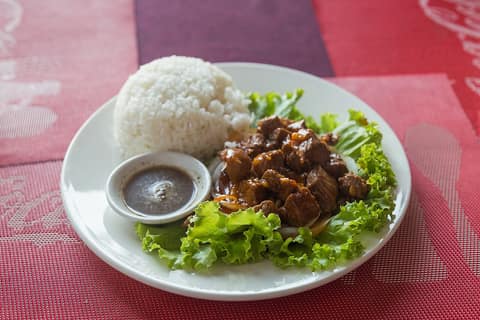
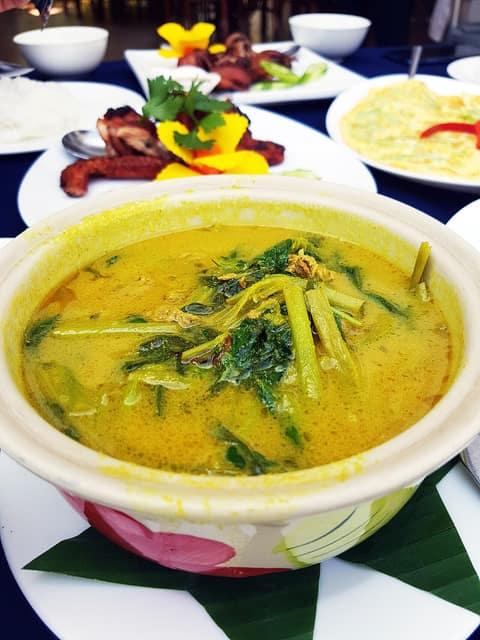
Cook one of the recipes, print the large-print pack about Cambodia, and finish with the big-screen quiz or the words crossword. Grandchildren can colour the flag.