The world's largest salt flat, silver cities high in the Andes, Lake Titicaca and a slice of the Amazon, in the heart of South America.
Bolivia lies in the middle of South America and has no coast. The west is high country: two ranges of the Andes with the Altiplano, a vast cold plateau, between them. Here are Lake Titicaca, which Bolivia shares with Peru, and the Salar de Uyuni, the largest salt flat in the world. The east and north, about two thirds of the country, are warm lowlands of savanna and Amazon rainforest.
Bolivia is one of the few countries with two capital cities, and it helps to know the difference. Sucre is the capital named in the constitution and the home of the Supreme Court. La Paz is the seat of government, where the president, the parliament and the electoral authority work. The largest city of all is a third one, Santa Cruz de la Sierra, in the tropical east.
Questions to ask the older generation
Memories fade faster than photos. Ask these over a meal or a phone call, and write the answers down.
Which town or region of Bolivia did our family come from? Was it near La Paz, El Alto, Santa Cruz de la Sierra?
Who was the first in the family to leave Bolivia, when, and why?
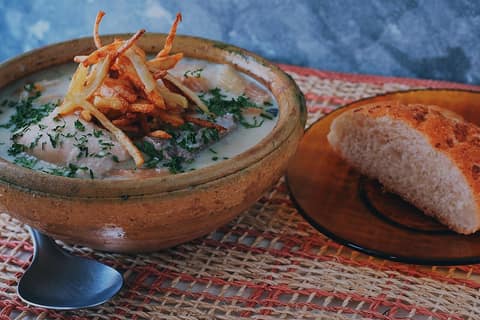
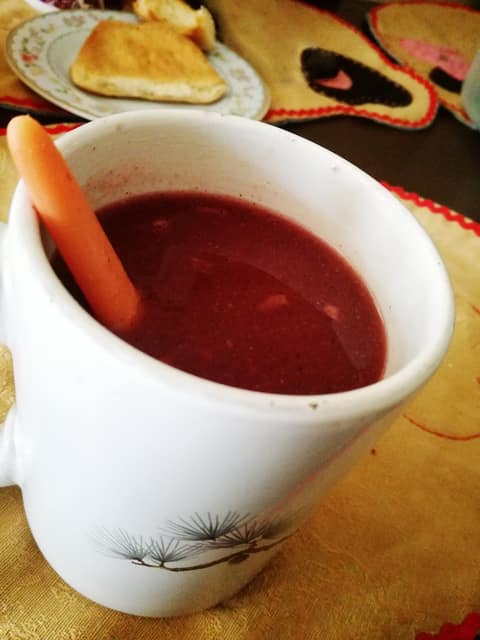
Which dishes from Bolivia were cooked at home? Did anyone make Salteña or Peanut soup?
Does anyone in the family still use a few words from the old country?
Were there songs, prayers, games or holidays from Bolivia that the family kept?
Are there old photos, letters or documents from Bolivia? Who has them?
If you could visit Bolivia together, where would you go first?
A short history of Bolivia
The high plateau around Lake Titicaca was home to the Tiwanaku culture more than a thousand years ago, and later became part of the Inca Empire. The Spanish arrived in the 1530s and found one of the richest silver mountains in the world at Potosí. Known in colonial times as Charcas or Upper Peru, the country became independent in 1825. In the century that followed, wars with its neighbours cost Bolivia its coast and large areas of land.
AD 600
Tiwanaku grows into a great city
From about AD 600, Tiwanaku, near the southern shore of Lake Titicaca, grew into a city with stone temples and platforms. It was the centre of a culture whose influence reached into today's Peru and Chile, fed by farmers who grew crops on raised fields.
1438
The Inca Empire begins to expand
Between 1438 and 1527, the Inca Empire expanded from its capital, Cusco, and took control of much of what is now the Bolivian Andes. The eastern lowlands stayed in the hands of independent Amazonian and Guaraní peoples.
1545
Potosí is founded below the silver mountain
In 1545 the silver of Cerro Rico, the 'rich mountain', was discovered, and the town of Potosí grew at its foot. It soon became one of the largest cities in the Americas. The silver was mined by Indigenous workers under the mita, a brutal system of forced labour.
1624
A university opens in Sucre
In 1624 the University of San Francisco Xavier was founded in Sucre by order of King Philip IV of Spain. It is one of the oldest universities in the Americas, and around 1800 it became a centre of ideas of independence.
1825
Bolivia declares independence
On 6 August 1825, after the victories of Marshal Antonio José de Sucre, the new republic was proclaimed. It was named after Simón Bolívar, first as the Republic of Bolívar and soon after as Bolivia.
1903
Bolivia loses Acre to Brazil
After the Acre War, Bolivia signed the Treaty of Petrópolis in 1903 and gave Brazil the Acre territory, a region rich in rubber. Since independence Bolivia has lost more than half of its territory to its neighbours.
1952
The National Revolution
In April 1952 the Revolutionary Nationalist Movement took power. It introduced the vote for all adults, bringing women and Indigenous peasants into political life, carried out a land reform and nationalised the largest tin mines.
2009
A new constitution creates the Plurinational State
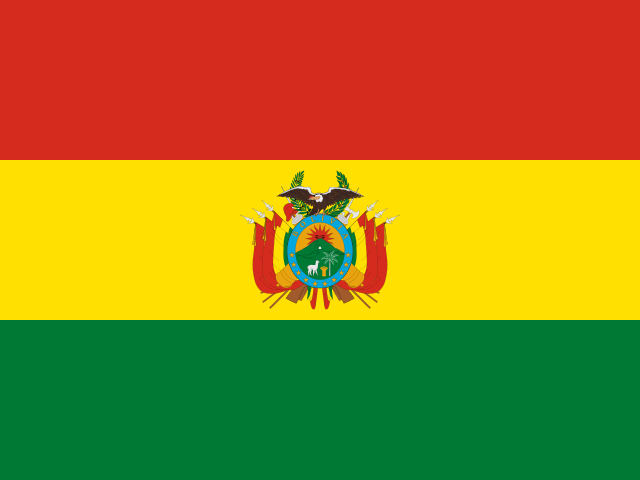
On 7 February 2009 a new constitution came into force. It renamed the country the Plurinational State of Bolivia, made 36 Indigenous languages official alongside Spanish, and made the wiphala flag a symbol of the state.
La Paz, La Paz: The Palacio Quemado, the presidential palace, on Plaza Murillo, The Witches' Market, with herbs and remedies used in Aymara traditions.
El Alto, La Paz: Colourful Neo-Andean buildings, The huge 16 de Julio street fair.
Sucre, Chuquisaca: The Casa de la Libertad, where the republic was founded, Chocolate makers and chocolate shops.
Santa Cruz de la Sierra, Santa Cruz: A tropical climate, warm all year, The lively Carnaval Cruceño.
Cochabamba, Cochabamba: Food: it joined UNESCO's network of creative cities of gastronomy in 2017, The Cristo de la Concordia statue on San Pedro Hill.
Potosí, Potosí: Cerro Rico and its mines, The old royal mint, the Casa de la Moneda.
Oruro, Oruro: The Carnival of Oruro, on UNESCO's list of intangible heritage, The Diablada, the dance of the devils.
Tarija, Tarija: Vineyards and a yearly wine festival, Singani, Bolivia's national grape spirit.
Uyuni, Potosí: Tours to the Salar de Uyuni, A busy street market.
Copacabana, La Paz: The Basilica of Our Lady of Copacabana, Boats to the Isla del Sol.
Trinidad, Beni: A base of the Bolivian Navy's river flotilla, The Mamoré River.
Rurrenabaque, Beni: Boat trips into Madidi National Park, Tours to the grassy wetlands, the pampas.