The Grand Palace and Wat Phra Kaew, Wat Arun, the Temple of Dawn, Wat Pho
Money
Thai baht (฿)
Good to know
Dress modestly at temples. Cover your shoulders and knees: a shirt with sleeves, and long trousers or a skirt below the knee. The Grand Palace and Wat Phra Kaew in Bangkok have a strict dress code at the entrance.
Ha Long Bay, The Imperial Citadel of Thăng Long, The Temple of Literature
Money
Vietnamese đồng (₫)
Good to know
Cross the street slowly and steadily. Motorbikes fill the streets of Hanoi and Ho Chi Minh City. To cross, wait for a gap, then walk at a slow, steady pace without stopping, running or stepping back. Riders will steer around you. Use pedestrian crossings and traffic lights where there are any.
Cambodian riel (៛); the United States dollar is also widely used
Good to know
Riel and dollars together. Cambodia uses two currencies side by side. Prices for hotels, tours and larger items are often in US dollars, while market food and small change are in riel, usually counted at 4,000 riel to the dollar. Carry clean, untorn dollar notes, because damaged ones are often refused, and spend your riel before you leave.
The Petronas Twin Towers, Batu Caves, The Putra Mosque
Money
Malaysian ringgit (RM)
Good to know
Use your right hand. Give and receive money, food and gifts with your right hand, and eat with it too. Point with your thumb, with the fingers folded, rather than your forefinger, and do not touch anyone's head.
Borobudur, Prambanan, The Kraton (Sultan's Palace) of Yogyakarta
Money
Indonesian rupiah (Rp)
Good to know
Use your right hand. Give and receive money, food and gifts with your right hand, and eat with it too. The left hand is traditionally used for washing and is seen as unclean.
San Agustin Church, Intramuros and Fort Santiago, Calle Crisologo, Vigan
Money
Philippine peso (₱)
Good to know
Add 'po' to be polite. Filipinos show respect by adding po to sentences and saying opo instead of oo for 'yes' when speaking to older people or strangers. Visitors are not expected to know this, but a 'salamat po' is always appreciated.
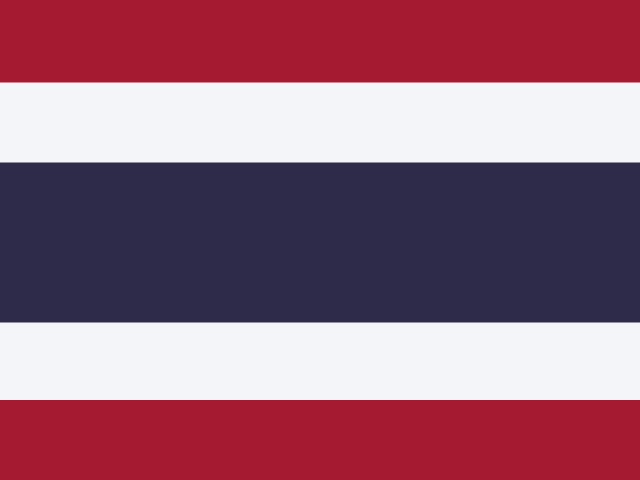 Thailand
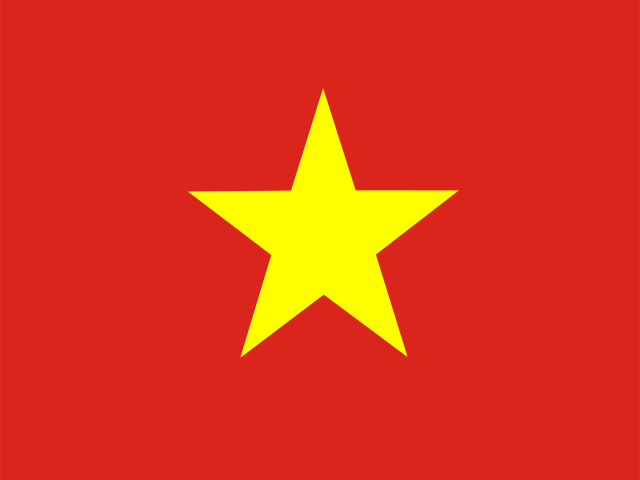 Vietnam
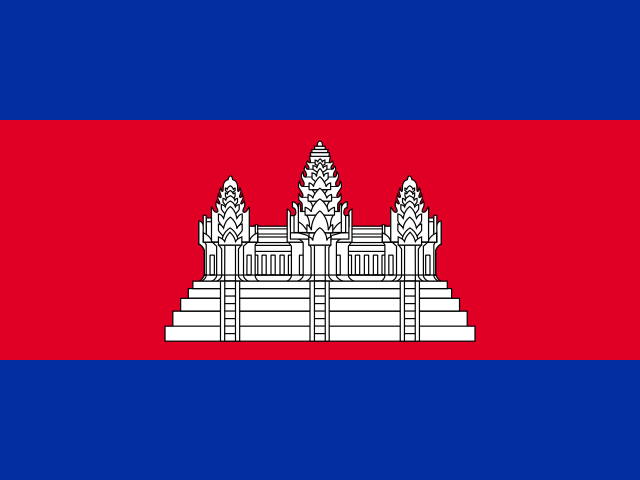 Cambodia
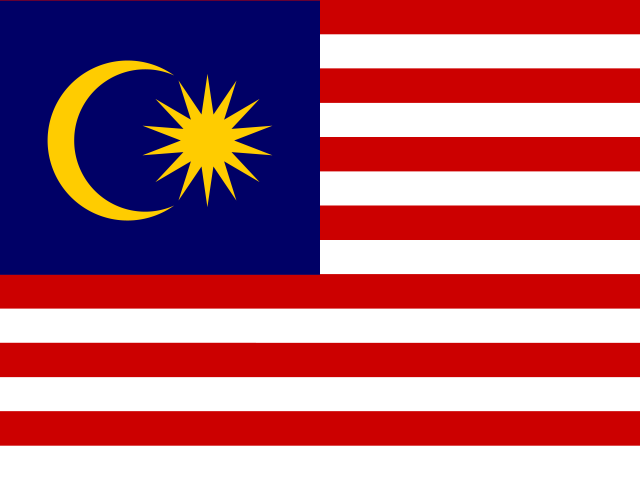 Malaysia
 Indonesia
 Philippines