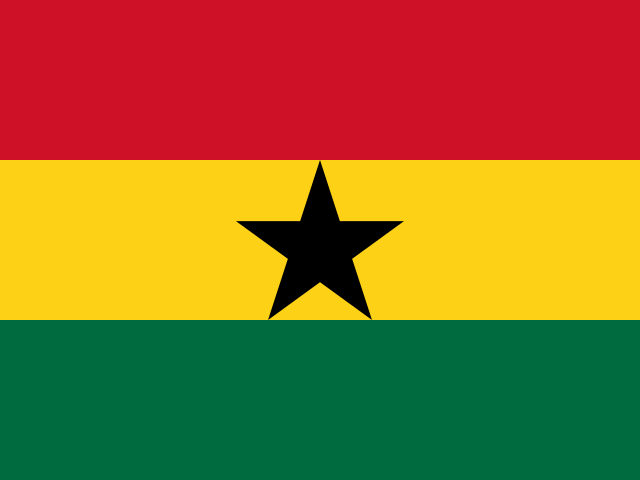
Learn Ghana before you go
10 phrases to learn
In Twi (Akan). Capital letters show the stressed part. Tap the heart to practise a phrase later.
At the table
- Wash your hands before the meal. Fufu, banku and kenkey are eaten with the fingers of the right hand.
- Use only your right hand to eat, and to give or receive food, money or gifts. Using the left hand is seen as disrespectful.
- Greet everyone before you sit down to eat. In Ghana greetings come first, before any other business.
- Soup is the main course, not a starter, and many Ghanaians do not count a rice dish as a 'real' meal the way they count fufu or banku.
- If you buy a bottled drink at a small bar or roadside stand, drink it there or tell the seller: the empty bottle is returned and reused.
Local tips
Arrange a visa and yellow fever certificate
Most visitors, including British citizens, need a visa arranged before travel. As of 2026 everyone entering Ghana must also show a yellow fever vaccination certificate, and the UK government advises that your passport should be valid for at least 6 months after arrival.
Greet first, and use your right hand
Greetings matter a great deal in Ghana: say good morning or good afternoon and ask how someone is before asking for anything. Eat, give and receive with your right hand; using the left is seen as rude. You may be offered the Ghanaian handshake, which ends with a snap of the fingers.
Money: cedis, mobile money and bargaining
Prices are in cedis. Mobile money is used everywhere for small and large payments, and many market stalls take only cash or mobile money. As of 2026, Mastercard is not widely accepted. Bargaining is expected in markets, so start low and keep it friendly.
Be careful in the sea
Swimming along Ghana's southern coast can be dangerous because of strong rip currents and undertows, and there are occasional reports of drownings. Swim only where locals say it is safe, never alone, and do not visit beaches alone.
Photos and clothing
It is illegal to photograph military sites or the airport, so ask before photographing any building with guards. Wearing camouflage or military clothing is illegal. Dress modestly away from the beach.
Stay healthy
Malaria is common everywhere, so take antimalarial tablets and use insect repellent and a mosquito net. Drink bottled or filtered water, and avoid swimming in lakes and rivers. For police, fire or ambulance, call 112 or 999.
Travel by day
Roads outside the main towns are often poorly lit, and the UK government advises against driving between towns after dark. Long-distance buses such as those of the State Transport Corporation are more comfortable than crowded tro-tro minibuses.
Dishes to try
- Jollof rice: Rice cooked in a rich sauce of tomatoes, peppers, onions, ginger and garlic until every grain turns orange-red. Ghanaian cooks often use fragrant jasmine rice. It is served at parties and family gatherings with chicken, goat or beef, fried plantain, salad and a spoonful of shito.
- Fufu (Fufuo): Boiled cassava pounded with green plantain, or sometimes cocoyam or yam, into a soft, smooth, stretchy dough. It is pounded in a wooden mortar with a long pestle, and between blows the dough is turned by hand. Fufu is served in a bowl of soup, such as light soup, palm nut soup or groundnut soup, and eaten with the fingers.
- Light soup (Nkrakra nkwan): A thin, spicy soup of tomatoes, onions, hot pepper, ginger and garden eggs (small African aubergines), cooked with goat, chicken or fish. It is called 'light' because the broth is thin. It is most often eaten with fufu, banku or rice balls.
- Groundnut soup (Nkatenkwan): A creamy, spicy soup made with ground peanuts, tomatoes and pepper, usually with chicken or goat. It is eaten with fufu, rice balls (omo tuo) or banku.
- Palm nut soup (Abenkwan): A rich orange-red soup made from the pulp of boiled palm fruits, cooked with meat, smoked fish, crab or snails, tomatoes, onions and pepper. It is served with fufu or rice balls.
- Banku: A mixture of fermented corn dough and cassava dough, cooked and stirred hard in a pot until it becomes a smooth, slightly sour ball. Banku with grilled tilapia and a fresh hot pepper sauce is a classic pairing served in many restaurants. It is also eaten with okra soup or light soup.
- Kenkey (Komi (Ga), dokono (Akan)): Maize soaked, ground and left to ferment for several days, then partly cooked, wrapped and boiled into firm, tangy dumplings. Ga kenkey is wrapped in maize husks, while Fante kenkey is wrapped in plantain leaves. It is eaten with fried fish, a raw pepper sauce and shito.
- Waakye: Rice and beans, usually black-eyed peas, cooked together with dried sorghum leaves, which give the dish its reddish-brown colour and are taken out before serving. It is a favourite breakfast or lunch, sold at roadside stalls wrapped in a leaf, with gari, shito, boiled eggs, fried plantain and even spaghetti, which Ghanaians call talia.
Cities to see
- Accra (capital): Independence Square (Black Star Square) and its arch, The Kwame Nkrumah Memorial Park, Makola Market and the old fishing quarter of Jamestown.
- Kumasi: Manhyia Palace, seat of the Asantehene, Kejetia Market, one of the largest markets in West Africa, Kente weaving villages nearby, such as Bonwire.
- Tamale: Dagomba culture and the kingdom of Dagbon, Gateway to the savanna of the north, The road north to Bolgatanga and west to Mole National Park.
- Sekondi-Takoradi: Takoradi harbour, one of Ghana's two deep-water ports, The offshore oil industry, Beaches and fishing towns along the western coast.
- Cape Coast: Cape Coast Castle, a UNESCO World Heritage Site, The University of Cape Coast, The PANAFEST festival and the Fetu Afahye festival.
- Elmina: Elmina Castle (St George's Castle), Fort St Jago on the hill above the town, The Bakatue festival of the sea and the lagoon each July.