World Stroll
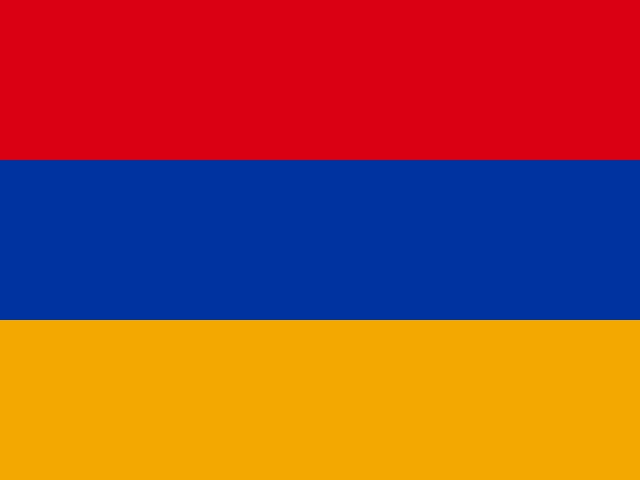
Flag of Armenia
Travel guide

Learn Armenia before you go

A small mountain country of stone monasteries, apricots and warm bread, with a capital built of pink stone and snowy Mount Ararat on the horizon.
Take the full trip
CapitalYerevan
CurrencyArmenian dram (AMD), introduced in November 1993
Official languageArmenian, written in its own alphabet. Russian is widely understood, especially by older people
Drives on theRight
Calling code+374

10 phrases to learn

In Armenian (its own alphabet). Capital letters show the stressed part. Tap the heart to practise a phrase later.

Barev dzez (Բարև ձեզ)
bah-REV DZEZ
Hello (polite)
Greeting anyone older than you or anyone you do not know
Bari luys (Բարի լույս)
bah-REE LOOYS
Good morning
Greeting someone in the morning. It literally means 'good light'
Bari yereko (Բարի երեկո)
bah-REE yeh-reh-KO
Good evening
Greeting someone in the evening
Bari gisher (Բարի գիշեր)
bah-REE gee-SHER
Good night
Saying goodbye late in the evening or going to bed
Inchpes ek? (Ինչպե՞ս եք)
inch-PES ek
How are you? (polite)
Asking after someone's health, which Armenians do often and warmly
Lav em, shnorhakalutyun (Լավ եմ, շնորհակալություն)
LAHV em, shnor-hah-kah-loo-TYOON
I'm fine, thank you
Answering 'How are you?'
Merci (Մերսի)
mer-SEE
Thanks
A quick, everyday thank you, borrowed from French and heard all the time
Khndrem (Խնդրեմ)
khun-DREM
Please / You're welcome
Asking for something, or answering when someone thanks you
Neroghutyun (Ներողություն)
neh-ro-ghoo-TYOON
Sorry / Excuse me
Apologising or getting someone's attention
Im anuny ... e (Իմ անունը ... է)
im ah-noo-NUH ... eh
My name is ...
Introducing yourself

At the table

  • Guests are treated with great warmth. Your hosts will keep offering more food, and refusing outright can seem unfriendly. Leaving a little on your plate is the polite sign that you have had enough.
  • At a feast there are many toasts, led by the host or a chosen toastmaster. Wait for the toast before you drink, and raise your glass to the family, to guests and to those who are no longer with you. Kenatsd! means 'Cheers!'
  • Lavash is used like a plate, a napkin and a spoon at once: wrap meat and herbs in it, or tear off a piece to scoop up food. Bread is treated with respect and is not thrown away carelessly.
  • Khash is a winter morning ritual. Crumble dried lavash into the broth, add garlic and salt, and eat slowly with friends. It is not a dish for a hurried lunch.
  • If you are invited to a home, bring a small gift such as chocolates, flowers or a cake. Expensive gifts are not expected.
  • Many restaurants add a service charge of about 10 percent. If it is not included, rounding up or leaving about 10 percent is usual.

Local tips

Arrive by air, or from Georgia or Iran

Most visitors fly into Zvartnots Airport near Yerevan. Overland, the open land borders are with Georgia and Iran. The borders with Turkey and Azerbaijan have long been closed to ordinary travellers (as of September 2026), and travel advice warns against going within 5 km of the border with Azerbaijan. Many nationalities, including citizens of the European Union, can visit without a visa, but check the current rules before you go.

Dress modestly in churches

Armenia is a deeply Christian country, and its churches are working places of worship. Cover your shoulders and knees, and men take off their hats. Many women cover their hair with a scarf. This is appreciated, though visitors are not strictly required to do it, and some churches keep scarves at the door.

Carry some cash outside Yerevan

Cards are accepted in most shops, hotels and restaurants in Yerevan, and there are plenty of cash machines. In villages, markets and small guesthouses you will usually need Armenian dram in cash.

Use taxi apps or agree a price

Taxis are cheap. In Yerevan, ride apps such as GG and Yandex Go are widely used (as of 2026) and show the fare in advance. For a street taxi, agree the price before you get in. Minibuses called marshrutkas link most towns cheaply, but they can be crowded.

Drink from the fountains

Tap water in Yerevan comes from mountain springs and is generally safe to drink. The little stone fountains called pulpulaks on street corners and at many monasteries are a free way to refill your bottle.

Remember the altitude and the sun

Much of Armenia lies above 1,000 m and Lake Sevan at about 1,900 m. Summers in Yerevan are hot, dry and sunny, with days that can reach 35 °C or more, while mountain evenings can be cold even in July. Bring a hat, sunscreen and a warm layer, and take mountain roads and hikes slowly.

Plan for long drives in the south

Armenia is small, but mountain roads are winding and slow. From Yerevan it is about 250 km by road to Goris and Tatev, a drive of several hours. Many people split the trip with a night in Yeghegnadzor, Jermuk or Goris.

Be gentle with painful history

Armenians are proud of their history and happy to talk about it. The genocide of 1915 and the conflict over Nagorno-Karabakh are painful subjects, so listen with care and avoid arguing about them.

Dishes to try

  • Khorovats (խորոված): Armenian barbecue: chunks of pork, lamb, beef or chicken, often still on the bone, grilled on long flat skewers over glowing embers. Aubergines, peppers and tomatoes are grilled beside the meat, then peeled and chopped into a smoky salad. Khorovats is the dish for weekends, family feasts and summer picnics, wrapped in lavash with raw onion and herbs.
  • Tolma (տոլմա): Tolma is the Armenian name for dolma: minced meat mixed with rice and herbs, wrapped in young grape leaves or cabbage leaves and simmered slowly. Summer tolma is made with stuffed peppers, tomatoes and aubergines. It is served warm with a sauce of yogurt and crushed garlic.
  • Harissa (հարիսա): A thick, smooth porridge of whole wheat and chicken or lamb, cooked for many hours and beaten until the meat and grain become one. It is served with a pool of melted butter on top. Harissa is traditionally shared from large pots at church feasts and at Easter.
  • Khash (խաշ): A clear, rich broth of beef or lamb feet, simmered through the night. It is eaten early on winter mornings, seasoned at the table with lots of crushed garlic and salt, with dried lavash crumbled into the bowl. Friends gather for a khash party, usually with herbs and a glass of vodka.
  • Lavash (լավաշ): Large, paper-thin sheets of wheat bread, slapped onto the hot wall of a tonir, a clay oven sunk into the ground, and baked in moments. Lavash is soft when fresh and can be dried and stored for months, then softened again with a sprinkle of water. It is used to wrap meat, cheese and herbs, and to scoop up food.
  • Zhingyalov hats (ժենգյալով հաց): A thin flatbread filled with a mound of finely chopped wild and garden greens, often 10 to 20 kinds, from spinach and sorrel to nettles and herbs. It is cooked on a hot griddle and eaten warm. It is especially popular during Lent, when many people do not eat meat.
  • Ghapama (ղափամա): A whole pumpkin stuffed with rice, dried apricots, prunes, raisins, nuts, butter and honey, then baked until soft. At the table the pumpkin is cut into wedges like a cake. It is an autumn and holiday dish, served at Christmas, New Year and weddings.
  • Spas (սպաս): A gentle soup of matsun, the Armenian yogurt, with hulled wheat, butter-fried onion and herbs such as coriander and mint. An egg and a little flour are stirred in so the yogurt does not curdle. It is eaten warm in winter and chilled in summer.

Cities to see

  • Yerevan (capital): Republic Square and the Opera House, The Cascade, a giant stairway of terraces and art, The Matenadaran, a museum of ancient manuscripts.
  • Gyumri: The 19th-century Kumayri historic district, Artists, craftsmen and a famous sense of humour, The memory of the 1988 earthquake.
  • Vanadzor: Green hills and forests of Lori, A base for the monasteries of the north.
  • Vagharshapat (Etchmiadzin): Etchmiadzin Cathedral, the mother church of the Armenian Church, The churches of Saint Hripsime and Saint Gayane, The ruins of Zvartnots Cathedral nearby.
  • Dilijan: Old Sharambeyan Street with craft workshops, Forest walks in Dilijan National Park, The monasteries of Haghartsin and Goshavank nearby.
  • Sevan: The monastery of Sevanavank on its peninsula, Beaches on Lake Sevan, Fish from the lake and local fish farms, especially trout and whitefish.

Landmarks and the city map are on the Armenia trip