Words and phrases: 50 questions from around the world
How to say hello, thank you and cheers around the world. Each question says which country it is about.
 Albania
What does 'A flisni anglisht?' mean?
- A. Do you speak English?
- B. Where is the toilet?
- C. How much is this?
- D. I don't understand
Show the answer
Do you speak English?. It means 'Do you speak English?'. 'Nuk kuptoj' means I don't understand.
 Tunisia
What does 'zouz' mean in Tunisian Arabic?
- A. Two
- B. Three
- C. One
- D. Ten
Show the answer
Two. Zouz means two. One is wahed and three is thletha.
 Zimbabwe
How do you say "hello" to one person in Shona?
- A. Mhoro
- B. Ngiyabonga
- C. Ndineurombo
- D. Chinoita marii?
Show the answer
Mhoro. Mhoro is hello to one person in Shona. Ngiyabonga is "thank you" in Ndebele, ndineurombo is "I am sorry" and chinoita marii? is "how much is this?".
 Bolivia
What are you asking if you point at the llajwa and say '¿Pica?'
- A. Is it spicy?
- B. Is it fresh?
- C. Is it free?
- D. Is it far?
Show the answer
Is it spicy?. ¿Pica? means 'Is it spicy?'. A good question to ask before you try llajwa, which can be very hot.
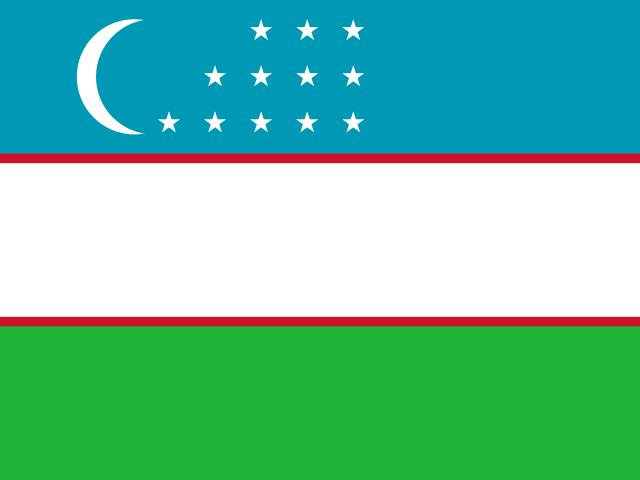 Uzbekistan
In Uzbek, "yoʻq" means "yes".
True or false?
Show the answer
False. False. Yoʻq means no. Yes is ha.
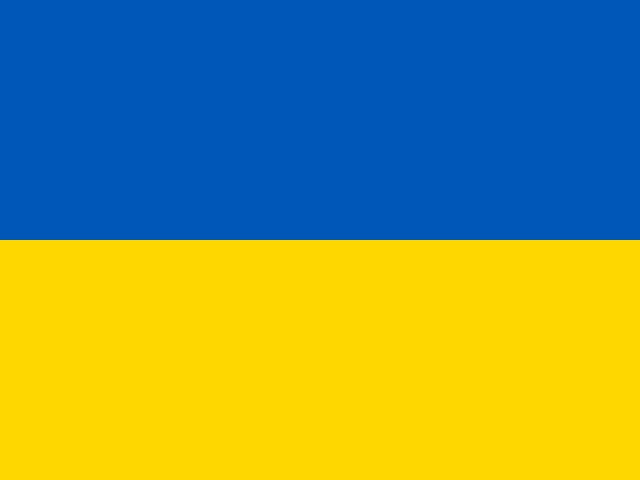 Ukraine
What does 'Budmo!' mean when glasses are raised?
- A. Cheers!
- B. Good night!
- C. Help!
- D. Thank you!
Show the answer
Cheers!. Budmo, 'let us be', is a common Ukrainian toast used like 'cheers'.
 Botswana
How do you say hello to a man in Setswana?
- A. Dumela rra
- B. Dumela mma
- C. Sala sentle
- D. Ke a leboga
Show the answer
Dumela rra. Dumela rra greets a man and dumela mma a woman. Sala sentle is goodbye and ke a leboga is thank you.
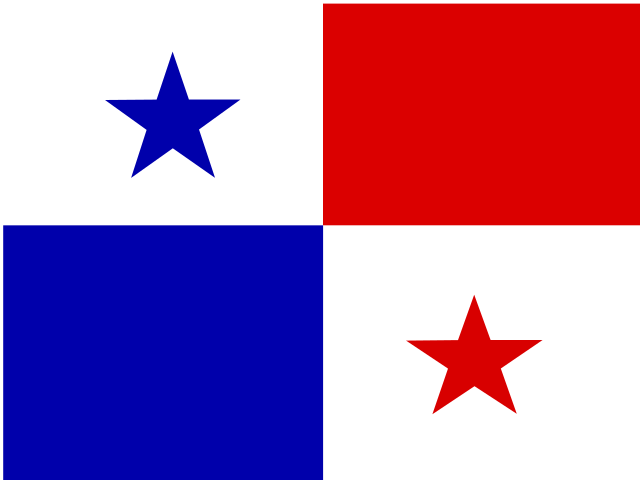 Panama
In Panama, what does "fren" mean?
- A. Friend
- B. Brother
- C. Boss
- D. Neighbour
Show the answer
Friend. Fren comes from the English word friend and is used for men and women alike.
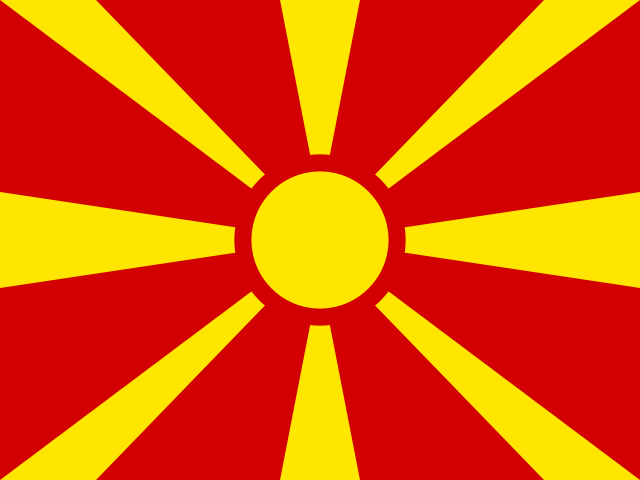 North Macedonia
In Macedonian, "skapo" means cheap.
True or false?
Show the answer
False. False. "Skapo" means expensive. The word for cheap is "evtino".
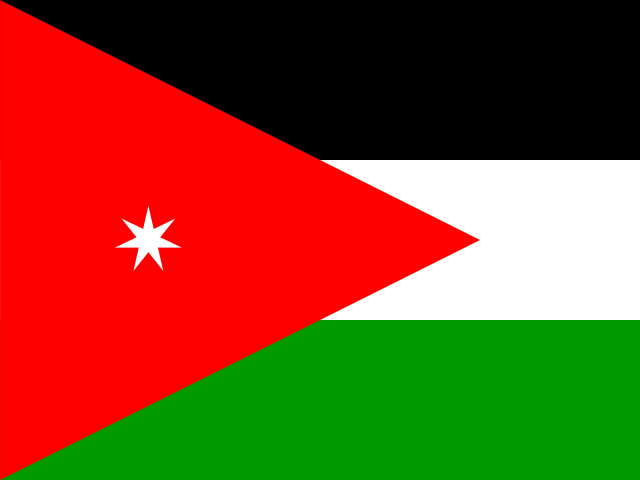 Jordan
What does 'shukran' mean?
- A. Thank you
- B. Hello
- C. Goodbye
- D. Please
Show the answer
Thank you. 'Shukran' means thank you. Hello is 'marhaba', goodbye is 'ma'a salama' and please is 'law samaHt'.
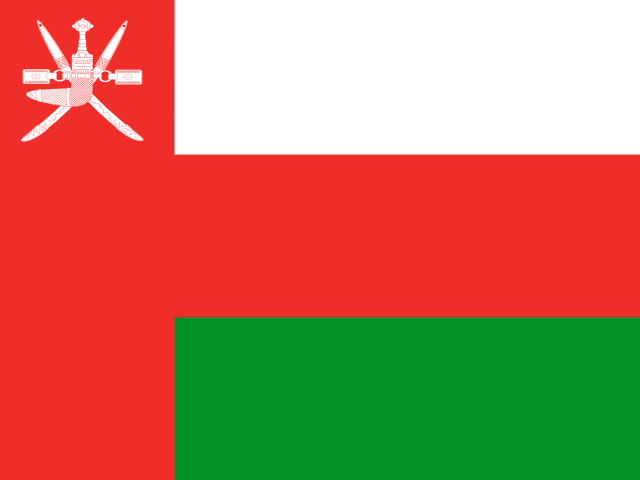 Oman
OmanIn Omani Arabic, what does 'zain' mean?
- A. good, fine
- B. bad
- C. water
- D. tomorrow
Show the answer
good, fine. Zain means good, fine: a word heard all the time in Oman and the Gulf.
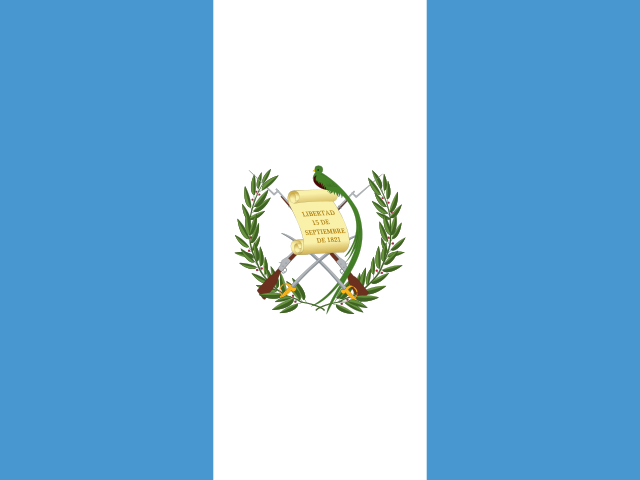 Guatemala
How do you ask for the bill in a restaurant?
- A. La cuenta, por favor
- B. ¡Buen provecho!
- C. Con permiso
- D. Mucho gusto
Show the answer
La cuenta, por favor. "La cuenta, por favor" means "The bill, please".
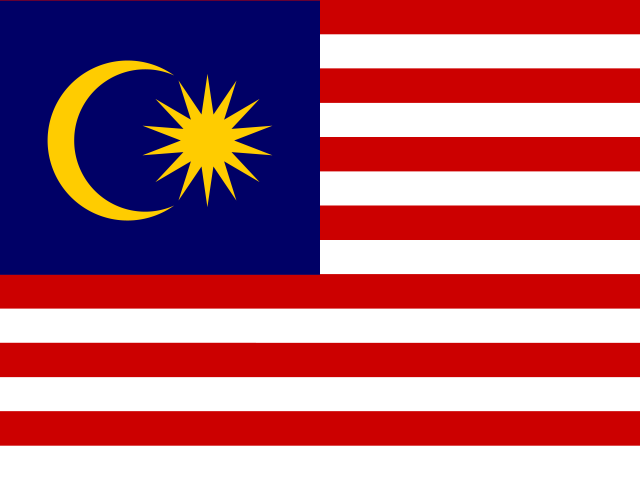 Malaysia
Saying 'Tak mahu pedas' tells the cook you do not want your food spicy.
True or false?
Show the answer
True. True. 'Tak mahu pedas' means I don't want it spicy; pedas means spicy hot.
 Hungary
What does the Hungarian word 'kenyér' mean?
- A. Bread
- B. Water
- C. Cheese
- D. Wine
Show the answer
Bread. Kenyér (KEN-yair) means bread, which Hungarians eat with almost every meal.
 Indonesia
How do you say 'good morning' in Indonesian?
- A. Selamat pagi
- B. Selamat malam
- C. Selamat sore
- D. Selamat jalan
Show the answer
Selamat pagi. 'Selamat pagi' is good morning. 'Selamat malam' is good evening, 'selamat sore' good afternoon and 'selamat jalan' goodbye to someone leaving.
 Nepal
NepalHow do you ask 'How much is this?' in Nepali?
- A. Yesko kati parchha?
- B. Mero naam ... ho
- C. Malai pani dinus
- D. Sanchai chhu
Show the answer
Yesko kati parchha?. Yesko kati parchha? asks the price. The others mean 'My name is', 'Please give me some water' and 'I am fine'.
 Latvia
How do you ask for the bill in a Latvian restaurant?
- A. Rēķinu, lūdzu
- B. Cik tas maksā?
- C. Kur ir tualete?
- D. Labdien
Show the answer
Rēķinu, lūdzu. "Rēķinu, lūdzu" means the bill, please. "Cik tas maksā?" asks how much something costs.
 Denmark
What is a 'cykel' in Danish?
- A. A bicycle
- B. A train
- C. A boat
- D. A bus
Show the answer
A bicycle. A 'cykel' is a bicycle, and there are a great many of them in Danish cities. A train is a 'tog'.
 Iceland
How do you say 'thank you' in Icelandic?
- A. Takk fyrir
- B. Bless
- C. Skál
- D. Afsakið
Show the answer
Takk fyrir. 'Takk fyrir', or simply 'takk', means thank you. 'Bless' is bye, 'skál' is cheers and 'afsakið' is excuse me.
 Mexico
In Mexico, '¡Qué padre!' is a way of saying 'How cool!' or 'How great!'.
True or false?
Show the answer
True. True. Padre means father, but in everyday Mexican Spanish it also means great or cool, so '¡Qué padre!' is 'How great!'.
 Ghana
GhanaHow do you say 'thank you' in Twi?
- A. Medaase
- B. Akwaaba
- C. Dabi
- D. Nkwan
Show the answer
Medaase. Medaase means thank you. Akwaaba is welcome, dabi is no, and nkwan is soup.
 Czechia
What do Czechs say when they raise their glasses?
- A. Na zdraví!
- B. Dobrou noc!
- C. Na shledanou!
- D. Pomoc!
Show the answer
Na zdraví!. Na zdraví (to your health) is the Czech 'cheers'.
 Italy
ItalyIn Italian, a 'piazza' is a town square.
True or false?
Show the answer
True. True. Every Italian town has at least one piazza, the heart of daily life.
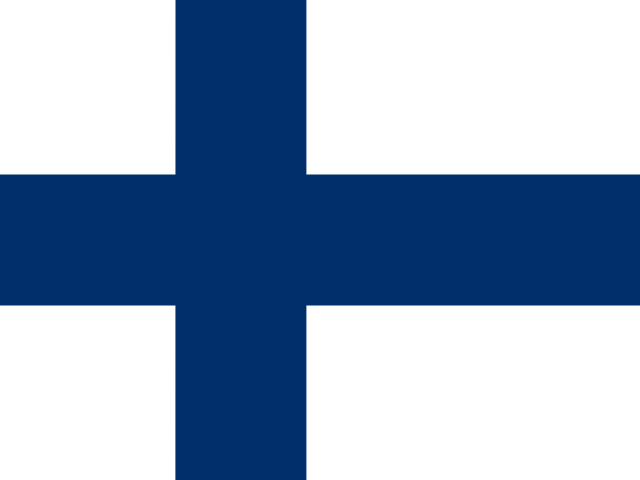 Finland
The Finnish word 'kiitos' means 'please'.
True or false?
Show the answer
False. False. Kiitos means 'thank you'.
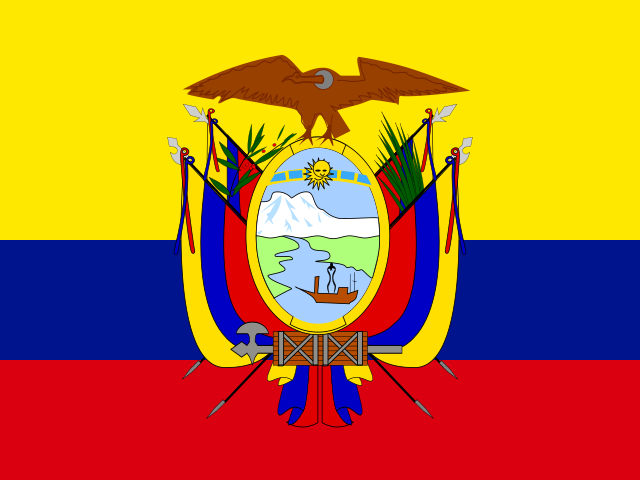 Ecuador
What would you say to greet someone at 3 in the afternoon?
- A. Buenas tardes
- B. Buenos días
- C. Buenas noches
- D. Buen provecho
Show the answer
Buenas tardes. Buenas tardes, good afternoon, is used from about noon until it gets dark.
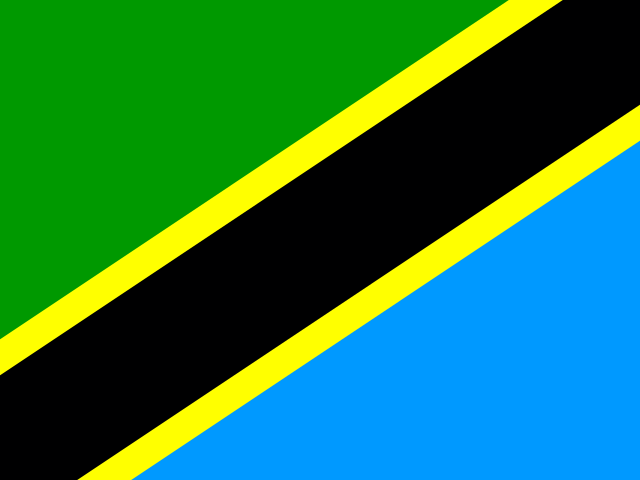 Tanzania
Which greeting do you use to show respect to an older person?
- A. Shikamoo
- B. Marahaba
- C. Lala salama
- D. Kwaheri
Show the answer
Shikamoo. Shikamoo is the respectful greeting for elders. Marahaba is the elder's reply, lala salama means good night, and kwaheri means goodbye.
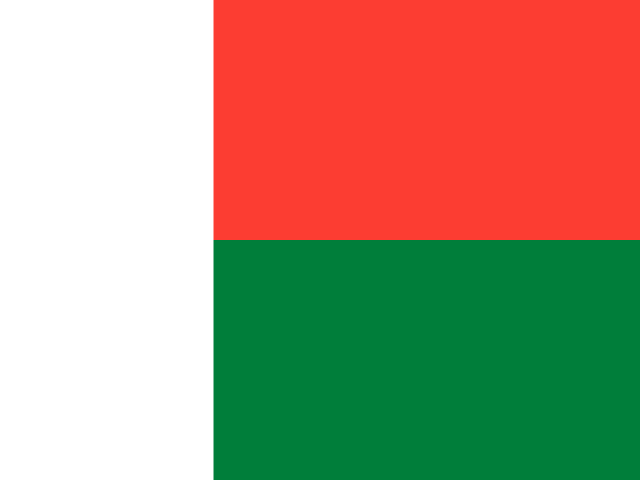 Madagascar
The Malagasy word arivo, found in the name Antananarivo, means 'a thousand'.
True or false?
Show the answer
True. True. Arivo means a thousand, and Antananarivo means 'City of the Thousand'.
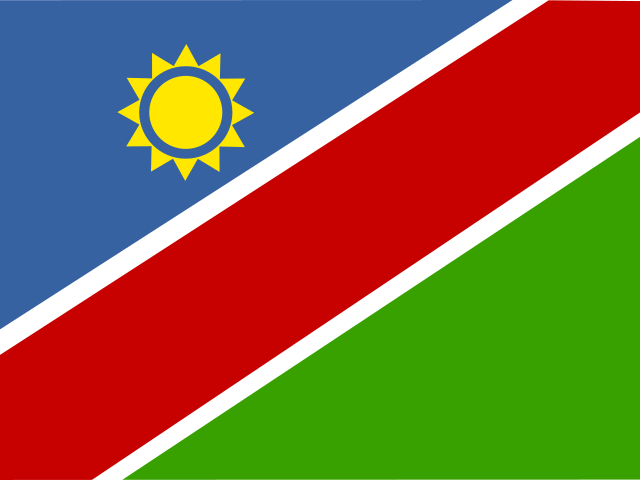 Namibia
What does 'tangi unene' mean in Oshiwambo?
- A. Thank you very much
- B. Good morning
- C. Goodbye
- D. How much is it?
Show the answer
Thank you very much. 'Tangi unene' means 'thank you very much'.
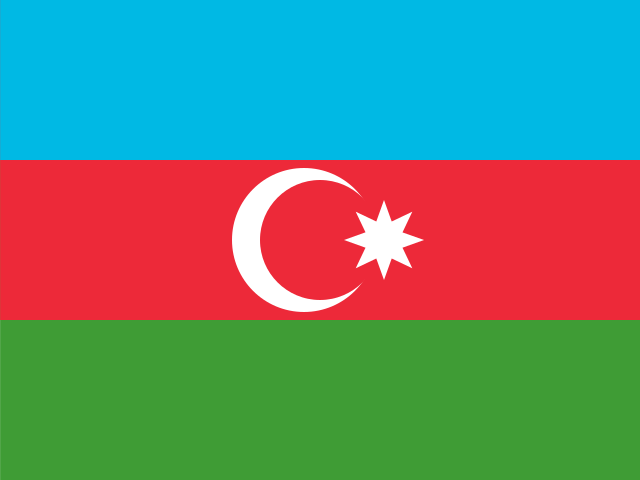 Azerbaijan
In Azerbaijani, the word 'bazar' can mean both 'market' and 'Sunday'.
True or false?
Show the answer
True. True. Bazar is the market, and it is also the name of Sunday, the traditional market day.
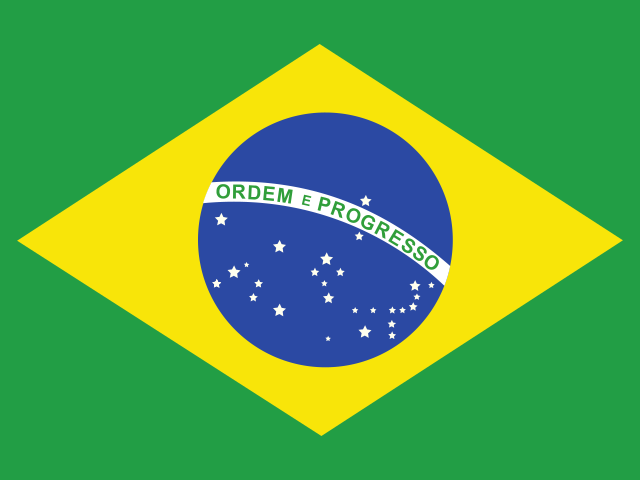 Brazil
In Portuguese, what is a 'praia'?
- A. A beach
- B. A square
- C. A church
- D. A bridge
Show the answer
A beach. A beach. Praia means a beach, as in Praia do Futuro in Fortaleza.
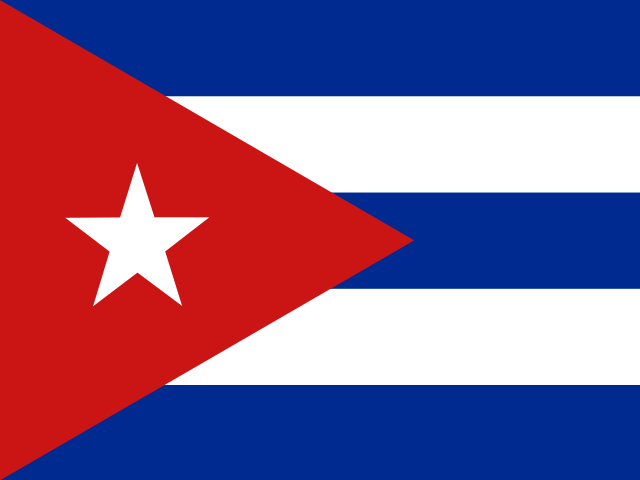 Cuba
CubaWhat does the Cuban word 'chévere' mean?
- A. Great, wonderful
- B. Expensive
- C. Tomorrow
- D. Very spicy
Show the answer
Great, wonderful. Chévere means great, wonderful. It is one of several Cuban words of African origin.
 South Korea
You say 'annyeonghi gaseyo' to someone who is leaving.
True or false?
Show the answer
True. True. It means 'go in peace'. If you are the one leaving, you say 'annyeonghi gyeseyo', stay in peace.
 Slovenia
When do Slovenians say 'Na zdravje!'?
- A. When raising their glasses
- B. When leaving a shop
- C. When going to bed
- D. When asking for the bill
Show the answer
When raising their glasses. It is said when raising their glasses. Na zdravje means to your health, the Slovene way of saying cheers.
 Portugal
In Portugal, 'autocarro' is the word for a car.
True or false?
Show the answer
False. False. An autocarro is a bus. Brazilians call a bus an ônibus.
 Lebanon
What does 'Addeish hayda?' mean?
- A. How much is this?
- B. Where is the toilet?
- C. Do you speak English?
- D. How are you?
Show the answer
How much is this?. Addeish hayda? means How much is this?, useful in any shop or market.
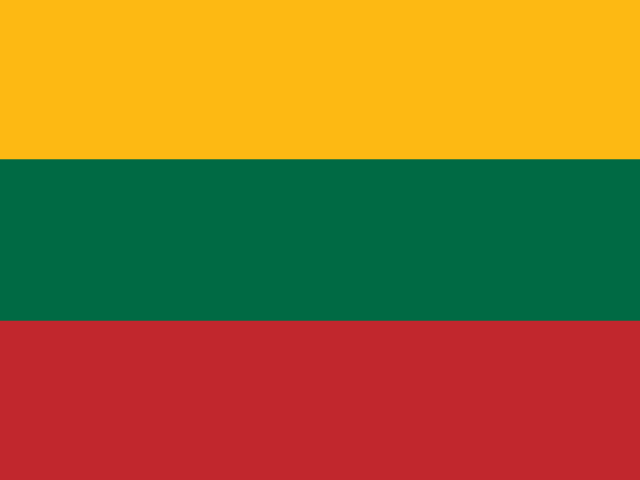 Lithuania
Which greeting is the polite "good day" in shops and offices?
- A. Laba diena
- B. Labanaktis
- C. Iki pasimatymo
- D. Gelbėkite
Show the answer
Laba diena. Laba diena means good day. Labanaktis is good night, iki pasimatymo is goodbye and gelbėkite means help.
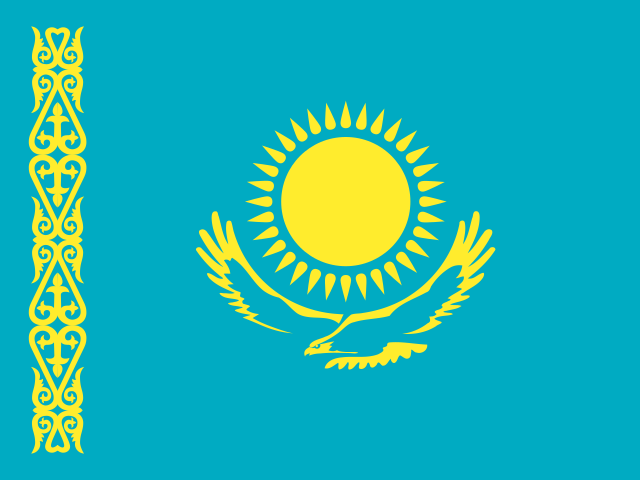 Kazakhstan
What does 'raqmet' (рақмет) mean?
- A. Thank you
- B. Hello
- C. Goodbye
- D. Please
Show the answer
Thank you. Raqmet means 'thank you'. Hello is 'sälem', goodbye 'sau bolyñyz' and please 'ötınem'.
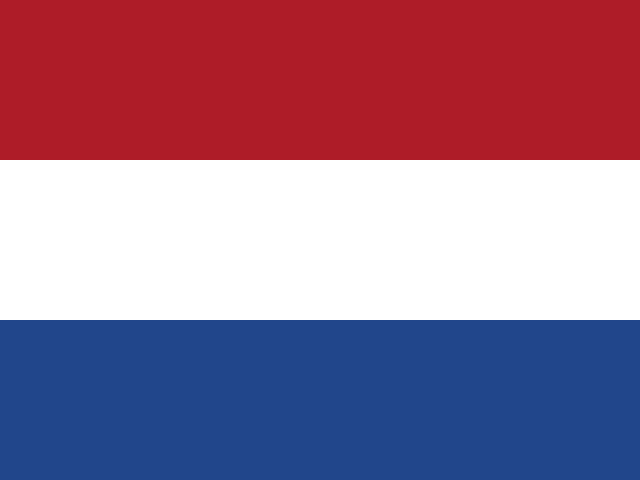 Netherlands
When do Dutch people say 'Eet smakelijk'?
- A. Just before eating
- B. When leaving a shop
- C. When raising a glass
- D. When saying sorry
Show the answer
Just before eating. Just before eating, everyone says 'eet smakelijk', meaning 'enjoy your meal'. For a toast, say 'proost'.
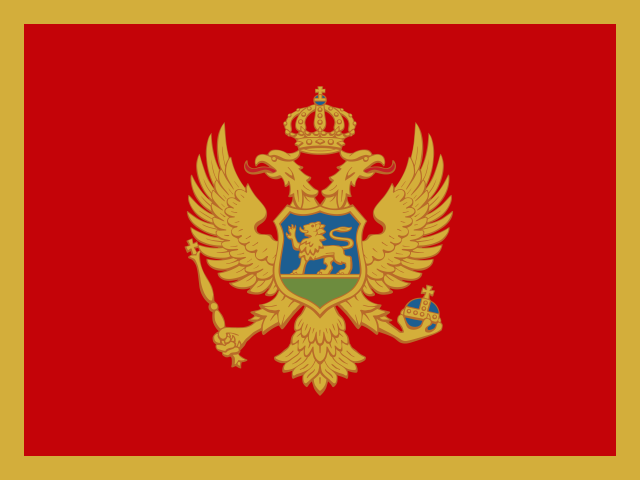 Montenegro
What do people say when they raise a glass?
- A. Živjeli
- B. Dobar tek
- C. Upomoć
- D. Račun, molim
Show the answer
Živjeli. Živjeli means cheers. Dobar tek is said before eating.
 Senegal
Someone greets you with 'Salaam aleekum'. What is the usual reply?
- A. Maleekum salaam
- B. Ba beneen yoon
- C. Dégguma
- D. Seer na lool
Show the answer
Maleekum salaam. Maleekum salaam, 'and upon you be peace'. Ba beneen yoon is goodbye, dégguma means I don't understand, and seer na lool means that's very expensive.
 Australia
If an Australian friend says 'It's my shout', what do they mean?
- A. I'm paying
- B. I'm angry
- C. I'm leaving now
- D. I'm lost
Show the answer
I'm paying. I'm paying, often for a round of drinks or the coffees. Friends usually take turns to shout.
 Bulgaria
What does 'blagodarya' mean?
- A. Thank you
- B. Goodbye
- C. Excuse me
- D. Cheers
Show the answer
Thank you. Blagodarya (благодаря) means thank you. Goodbye is dovizhdane, excuse me is izvinete and cheers is nazdrave.
 Ireland
What are the police called in Ireland?
- A. The Gardaí
- B. The Taoiseach
- C. The Fáilte
- D. The Ceol
Show the answer
The Gardaí. The Gardaí are the police, and one officer is a Garda. The Taoiseach is the head of government.
 Uruguay
How do you ask for the bill in a restaurant?
- A. La cuenta, por favor
- B. ¡Buen provecho!
- C. Permiso
- D. Mucho gusto
Show the answer
La cuenta, por favor. "La cuenta, por favor" means "The bill, please".
 Vietnam
The Vietnamese word 'cay' means cold.
True or false?
Show the answer
False. False. Cay means spicy or hot. To ask for food without chilli, say không cay.
 Mongolia
What is a 'ger'?
- A. The round felt tent of Mongolian herders
- B. A horse
- C. A mountain
- D. A bowl of tea
Show the answer
The round felt tent of Mongolian herders. A ger (гэр) is the round felt tent of Mongolian herders, and many families still live in one. In English it is also called a yurt.
 Israel
When do you say "Beteavon"?
- A. Before a meal
- B. When someone sneezes
- C. When leaving late at night
- D. When paying the bill
Show the answer
Before a meal. Beteavon is said before a meal, like bon appétit.
 United Kingdom
In a British hotel, you take the 'lift'. What is that in American English?
- A. The elevator
- B. The escalator
- C. The stairs
- D. The shuttle bus
Show the answer
The elevator. A 'lift' in a building is the elevator.
 Norway
What do Norwegians say to the host after a meal?
- A. Takk for maten
- B. God jul
- C. Lykke til
- D. Hva heter du?
Show the answer
Takk for maten. "Takk for maten" means "thanks for the food". The host may answer "Vel bekomme".
 Argentina
How do you ask for the bill in a restaurant?
- A. La cuenta, por favor
- B. ¡Buen provecho!
- C. Mucho gusto
- D. Permiso
Show the answer
La cuenta, por favor. La cuenta, por favor. The waiter will not bring the bill until you ask.
Answer key
- A. Do you speak English?
- A. Two
- A. Mhoro
- A. Is it spicy?
- False
- A. Cheers!
- A. Dumela rra
- A. Friend
- False
- A. Thank you
- A. good, fine
- A. La cuenta, por favor
- True
- A. Bread
- A. Selamat pagi
- A. Yesko kati parchha?
- A. Rēķinu, lūdzu
- A. A bicycle
- A. Takk fyrir
- True
- A. Medaase
- A. Na zdraví!
- True
- False
- A. Buenas tardes
- A. Shikamoo
- True
- A. Thank you very much
- True
- A. A beach
- A. Great, wonderful
- True
- A. When raising their glasses
- False
- A. How much is this?
- A. Laba diena
- A. Thank you
- A. Just before eating
- A. Živjeli
- A. Maleekum salaam
- A. I'm paying
- A. Thank you
- A. The Gardaí
- A. La cuenta, por favor
- False
- A. The round felt tent of Mongolian herders
- A. Before a meal
- A. The elevator
- A. Takk for maten
- A. La cuenta, por favor