A young island of fire and ice in the North Atlantic, with glaciers, waterfalls, hot springs and one of the oldest parliaments in the world.
Iceland is an island country in the North Atlantic, just south of the Arctic Circle. It sits on the Mid-Atlantic Ridge, where the North American and Eurasian plates are slowly pulling apart, so it has volcanoes, geysers and hot springs, as well as great glaciers. It is the most thinly populated country in Europe: about 395,000 people live there, and around two thirds of them live in and around the capital, Reykjavík.
Norse settlers, many with Irish and Scottish slaves and wives, arrived from about 874. In 930 they founded the Althing, an open-air assembly at Þingvellir, and Iceland became Christian in the year 1000. From 1262 the island was ruled by Norway and later by Denmark. It became a sovereign kingdom under the Danish king in 1918 and a fully independent republic on 17 June 1944.
Questions to ask the older generation
Memories fade faster than photos. Ask these over a meal or a phone call, and write the answers down.
Which town or region of Iceland did our family come from? Was it near Akureyri, Húsavík, Ísafjörður?
Who was the first in the family to leave Iceland, when, and why?
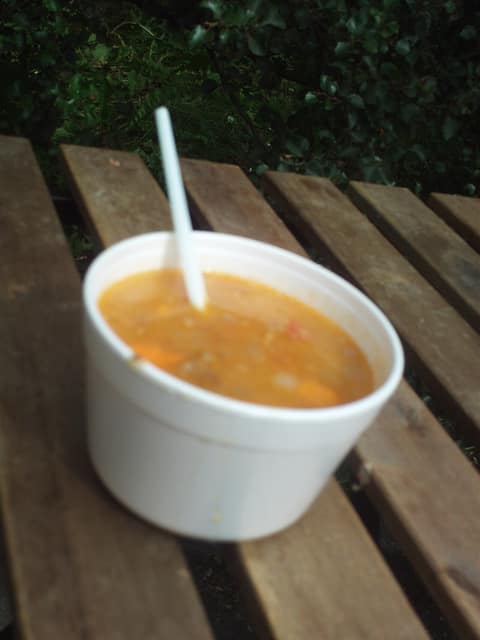
Which dishes from Iceland were cooked at home? Did anyone make Skyr or Icelandic lamb soup?
Does anyone in the family still speak Icelandic, or use a few words of it?
Were there songs, prayers, games or holidays from Iceland that the family kept?
Are there old photos, letters or documents from Iceland? Who has them?
If you could visit Iceland together, where would you go first?
A short history of Iceland
Iceland was one of the last large places on Earth to be settled. Its people kept careful records of their own story, from the first Norse farmers and the sagas to independence, fishing wars and life beside active volcanoes.
AD 874
Ingólfur settles in Reykjavík
According to the medieval Book of Settlement, the Norwegian chieftain Ingólfur Arnarson built his farm in 874 at a bay he named Reykjavík, 'smoky bay', after the steam from hot springs. He is remembered as the first permanent settler, and others soon followed from Norway and the British Isles.
1000
Iceland adopts Christianity
Pagans and Christians were close to civil war, so the question was put to the Althing. The lawspeaker Þorgeir, himself a pagan, decided that all Icelanders should be baptised and follow 'one law and one religion', while some pagan customs were allowed in private for a time.
1550
The Reformation
The Danish king imposed the Lutheran faith on his lands. In 1550 Jón Arason, the last Catholic bishop in Iceland, was beheaded with two of his sons, and Iceland became Lutheran, as it has remained.
1845
The Althing meets again in Reykjavík
The old Althing had stopped meeting around 1800. As national feeling grew, the Danish king restored it by royal decree, and the new Althing first met in Reykjavík in 1845, at first only as an advisory assembly. The independence leader Jón Sigurðsson argued that meeting in Reykjavík would help make the town truly Icelandic.
1944
Iceland becomes a republic
In a referendum in May 1944, more than 97 percent of voters chose to end the union with Denmark. The Republic of Iceland was declared at Þingvellir on 17 June 1944, which is now the national day, with Sveinn Björnsson as the first president.
1976
The last Cod War ends
Between 1958 and 1976 Iceland had three 'Cod Wars' with the United Kingdom over fishing limits, with coast guard ships cutting the nets of British trawlers. In 1976 a NATO-brokered agreement accepted Iceland's 200-nautical-mile fishing zone.
2008
The banks collapse
In October 2008 all three of Iceland's big banks failed. Compared with the size of its economy, it was the largest banking collapse of any country in history. The króna fell sharply, and a deep recession and large protests followed.
2023
Eruptions begin near Grindavík
In November 2023 strong earthquakes cracked the fishing town of Grindavík, on the Reykjanes Peninsula, and it was evacuated. From 18 December 2023 to August 2025 there were nine eruptions along the nearby Sundhnúkur crater row. As of September 2026, the last one began in July 2025, and scientists say magma is again building up underneath.