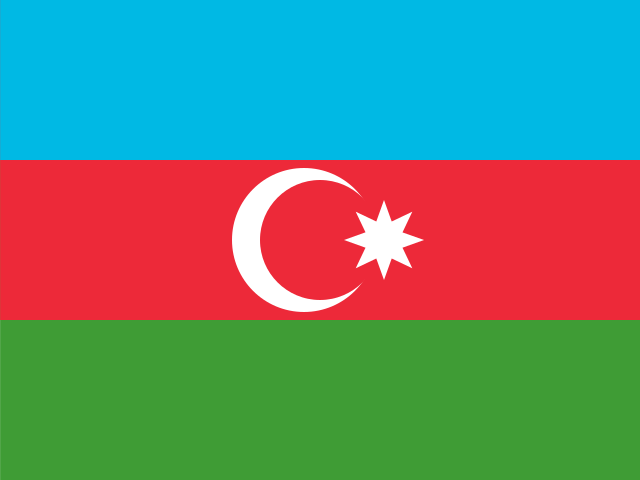
The Land of Fire on the Caspian shore, where flames rise from the hillsides, the old walled city of Baku meets glass towers, and tea comes in a pear-shaped glass.
Azerbaijan lies in the South Caucasus, where Eastern Europe meets Western Asia. The Caspian Sea, the world's largest inland body of water, forms its eastern edge, the snowy Greater Caucasus rises in the north, and broad plains along the Kura and Aras rivers fill the middle. Natural gas seeps out of the ground in so many places that flames have burned on its hillsides for centuries, which is why the country is often called the Land of Fire. A separate part of the country, the Nakhchivan Autonomous Republic, lies to the west and is cut off from the rest of Azerbaijan by a strip of Armenian territory.
People have lived here since the Stone Age, and the rock carvings of Gobustan show hunters, dancers and boats from thousands of years ago. The land was later part of Caucasian Albania, a kingdom unrelated to the Albania in the Balkans, and then of Persian empires, the Arab caliphate and Turkic dynasties, while local rulers called the Shirvanshahs built palaces in Baku. The Russian Empire took the region in the early 1800s. In 1918 the Azerbaijan Democratic Republic was declared, but in 1920 it became part of the Soviet Union, and Azerbaijan regained its independence in 1991.
Questions to ask the older generation
Memories fade faster than photos. Ask these over a meal or a phone call, and write the answers down.
Which town or region of Azerbaijan did our family come from? Was it near Sumgait, Ganja, Mingachevir?
Who was the first in the family to leave Azerbaijan, when, and why?
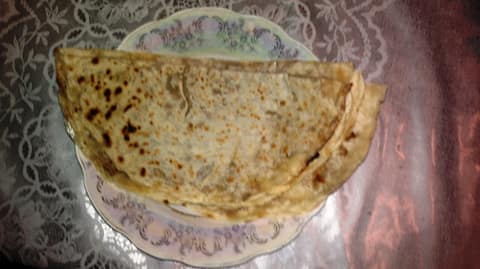
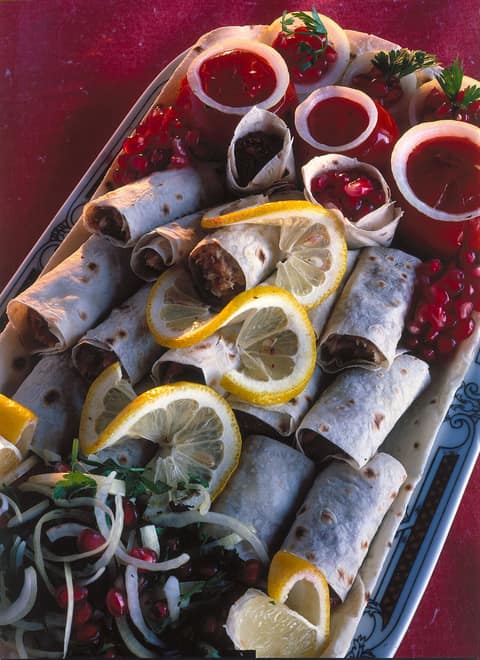
Which dishes from Azerbaijan were cooked at home? Did anyone make Qutab or Dushbara?
Does anyone in the family still speak Azerbaijani, or use a few words of it?
Were there songs, prayers, games or holidays from Azerbaijan that the family kept?
Are there old photos, letters or documents from Azerbaijan? Who has them?
If you could visit Azerbaijan together, where would you go first?
A short history of Azerbaijan
The rock carvings of Gobustan, near Baku, show that people lived by the Caspian thousands of years ago. In ancient times the land north of the Aras river was part of Caucasian Albania, a kingdom that adopted Christianity in the 4th century, and it was often ruled by or tied to Persian empires. Arab armies brought Islam in the 7th century, Turkic peoples arrived from Central Asia from the 11th century, and slowly the Turkic language that became Azerbaijani spread across the region. Local dynasties such as the Shirvanshahs ruled from Shamakhi and Baku, the Safavids of Iran held the area for centuries, and in the early 1800s the Russian Empire took it. The oil boom, a short-lived republic, seventy years of Soviet rule and independence in 1991 followed. The conflict with Armenia over Karabakh has shaped the country since the late 1980s, and the two sides still tell parts of that story very differently.
1139
The great Ganja earthquake
In September 1139 one of the deadliest earthquakes in history struck the region around Ganja. Contemporary accounts speak of very many dead, though the numbers are disputed. Part of Mount Kapaz collapsed and blocked a river, and the water filled a valley to form Lake Göygöl, still one of the country's most beautiful sights.
1501
The Safavids take power
In 1501 the young Ismail I, leader of the Safavid order, was crowned shah in Tabriz and soon brought the lands of the Shirvanshahs under his rule. The Safavid dynasty ruled Iran and most of today's Azerbaijan for over two centuries and made Shia Islam the state religion. Ismail also wrote poems in the Turkic language that became Azerbaijani, under the pen name Khatai.
1846
An oil well is drilled at Bibi-Heybat
People around Baku had collected oil from shallow pits for centuries. In 1846 a Russian engineer used a percussion drill to sink a 21-metre well at Bibi-Heybat, on the edge of Baku, and struck oil. It was one of the earliest drilled oil wells in the world, thirteen years before the famous Drake well in the United States.
1918
The Azerbaijan Democratic Republic is declared
On 28 May 1918, after the collapse of the Russian Empire, the Azerbaijani National Council declared independence. The new republic had an elected parliament with members from many communities, gave women the vote, one of the earliest countries to do so, and founded Baku State University. 28 May is celebrated as Independence Day.
1991
Independence is restored
On 18 October 1991 the Supreme Council of Azerbaijan adopted a declaration restoring the country's independence, and voters confirmed it in a referendum in December, just as the Soviet Union came to an end. In the same year Azerbaijan decided to return to the Latin alphabet.
2006
Oil flows through the BTC pipeline
Caspian oil had long reached the world only through Russia. On 28 May 2006 the first oil pumped from Baku reached the Turkish port of Ceyhan on the Mediterranean, through the new Baku-Tbilisi-Ceyhan pipeline, about 1,768 km long, which crosses Azerbaijan, Georgia and Türkiye.
2023
Azerbaijan takes control of Karabakh
The six-week war of 2020 and the ceasefire that ended it returned the seven districts and part of Karabakh to Azerbaijani control. In September 2023 a one-day Azerbaijani military operation ended the Armenian-run administration in the region, and almost all of Karabakh's Armenians, more than 100,000 people, left for Armenia. Armenia and many international observers call this an expulsion; Azerbaijan says the residents chose to leave.
2025
A peace agreement is initialled
On 8 August 2025, at a meeting in Washington, the leaders of Armenia and Azerbaijan initialled the text of a peace agreement and signed a joint declaration. As of September 2026 the agreement had not yet been signed or ratified, and talks on the remaining steps continue.