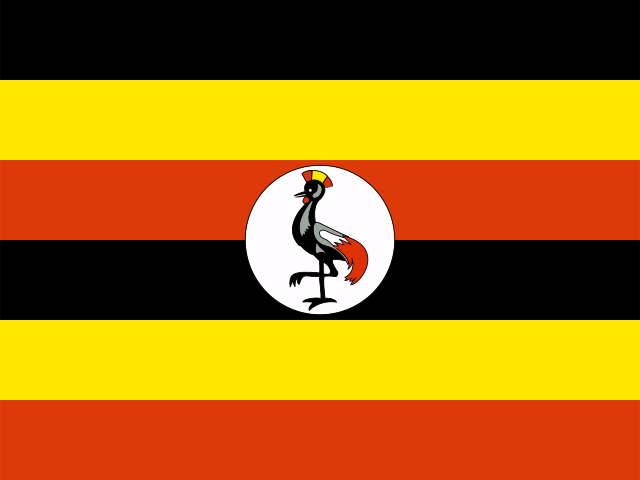
Learn Uganda before you go
10 phrases to learn
In Luganda (Oluganda). Capital letters show the stressed part. Tap the heart to practise a phrase later.
At the table
- Wash your hands before and after the meal. In many homes someone brings a jug of water and a basin and pours water over your hands.
- Traditional foods such as matooke, posho and millet bread are often eaten with the fingers. Use your right hand.
- Visitors who arrive at mealtime are usually invited to join the family. Accept at least a little food; refusing everything can seem unfriendly.
- Wait for the host or the eldest person to start before you begin to eat.
- At a wedding or an introduction ceremony in Buganda, each guest may be served a parcel of luwombo. Open the smoked banana leaf carefully and eat from it like a bowl.
- Saying 'Webale' (thank you) to the cook after a meal is always appreciated.
Local tips
Arrange your visa and yellow fever certificate
As of September 2026 most visitors must apply for a Uganda visa online before travelling, or for the East Africa Tourist Visa that also covers Kenya and Rwanda. You also need a certificate showing that you have been vaccinated against yellow fever, and officials may ask to see it on arrival. Your passport should be valid for at least six months.
Check official travel warnings
Most visitors travel in Uganda without trouble, but there have been attacks in the past near the border with DR Congo, including in parks in the west. Check your government's current travel advice before you go and again before visiting border areas.
Book gorilla permits early
Gorilla trekking permits in Bwindi and Mgahinga are limited each day and cost several hundred US dollars, so book months ahead through the Uganda Wildlife Authority or a licensed operator. The hike can take several hours on steep, muddy slopes; good boots, gloves and a walking stick help.
Take care on the roads
Boda bodas, the motorbike taxis, are quick and cheap, but they have many accidents and some passengers have been robbed, so the UK government advises visitors to avoid them; if you do ride one, wear a helmet and ask the driver to go slowly. Outside Kampala and the Kampala to Entebbe road, avoid travelling by road after dark.
Ask before taking photos
It is forbidden to photograph military, official or diplomatic sites, and this includes the Owen Falls Dam at the source of the Nile near Jinja. Always ask people before you take their photo.
Protect your health
Malaria is found in most of the country, so ask your doctor about tablets and use a mosquito net and repellent. Many lakes and slow rivers carry bilharzia, so do not swim unless you know the water is safe, and drink bottled or boiled water.
Dress modestly and greet first
Ugandans are warm and polite, and a proper greeting matters before any question or purchase. Away from tourist areas, dress modestly: long trousers or skirts below the knee are best.
Know the emergency numbers
As of September 2026 the emergency number for police, fire and ambulance is 999. Keep the number of your hotel, tour operator and embassy with you.
Dishes to try
- Matooke (Amatooke): Green cooking bananas, peeled, wrapped in banana leaves and steamed for a long time until soft, then mashed into a smooth yellow mound. It is served with groundnut sauce, beans, meat or fish stew, and is considered a national dish.
- Groundnut sauce: A smooth, thick sauce of ground roasted peanuts cooked in water with onion and tomato. It is one of the most common sauces in the country and is poured over matooke, posho, rice or sweet potatoes, sometimes with smoked fish, meat or mushrooms added.
- Luwombo (Oluwombo): A stew of chicken, beef, goat, fish or groundnuts with mushrooms, wrapped in parcels of smoked banana leaves and steamed slowly, so the meat takes on a gentle smoky taste. Each guest is given a parcel to open at the table.
- Posho (Kawunga): White maize flour stirred into boiling water until it becomes a firm, smooth dough, then cut into slices or served in a mound. It is cheap and filling, eaten with beans, greens or groundnut sauce, and is a standard meal in schools.
- Millet bread (Kalo): A firm, dark brown dough made by stirring millet flour, sometimes mixed with cassava flour, into boiling water. It is eaten with the hands, dipped into sauces such as firinda, eshabwe or groundnut sauce.
- Katogo: A one-pot breakfast of chopped green matooke cooked in a tomato and onion sauce, usually with beans, offal, meat or groundnuts. Once thought of as a poor man's food, it is now loved by everyone.
- Rolex: A fresh chapati rolled around an omelette made with onion, tomato and cabbage. It is cooked to order at roadside stalls from morning to night and is the country's favourite street food.
- Kikomando: Chapati cut into small pieces and mixed with fried beans, sometimes with avocado or meat stew. It is cheap and filling and popular with students and workers.
Cities to see
- Kampala (capital): The Kasubi Tombs of the Buganda kings, The cathedrals on Namirembe and Rubaga hills, Makerere University.
- Entebbe: Entebbe International Airport, The National Botanical Gardens, laid out in 1898, Views and beaches on Lake Victoria.
- Jinja: The source of the Nile, White-water rafting and kayaking, Hydroelectric dams on the Nile.
- Gulu: Acholi culture, music and dance, Trade with South Sudan, Gulu University.
- Mbarara: Long-horned Ankole cattle, Dairy products and eshabwe, Lake Mburo National Park nearby.
- Fort Portal: The Tooro kingdom, Crater lakes in the hills around it, Kibale forest and its chimpanzees.