Senegalese recipe
How to make Thieboudienne
ceebu jën
Saint-Louis, now eaten all over Senegal
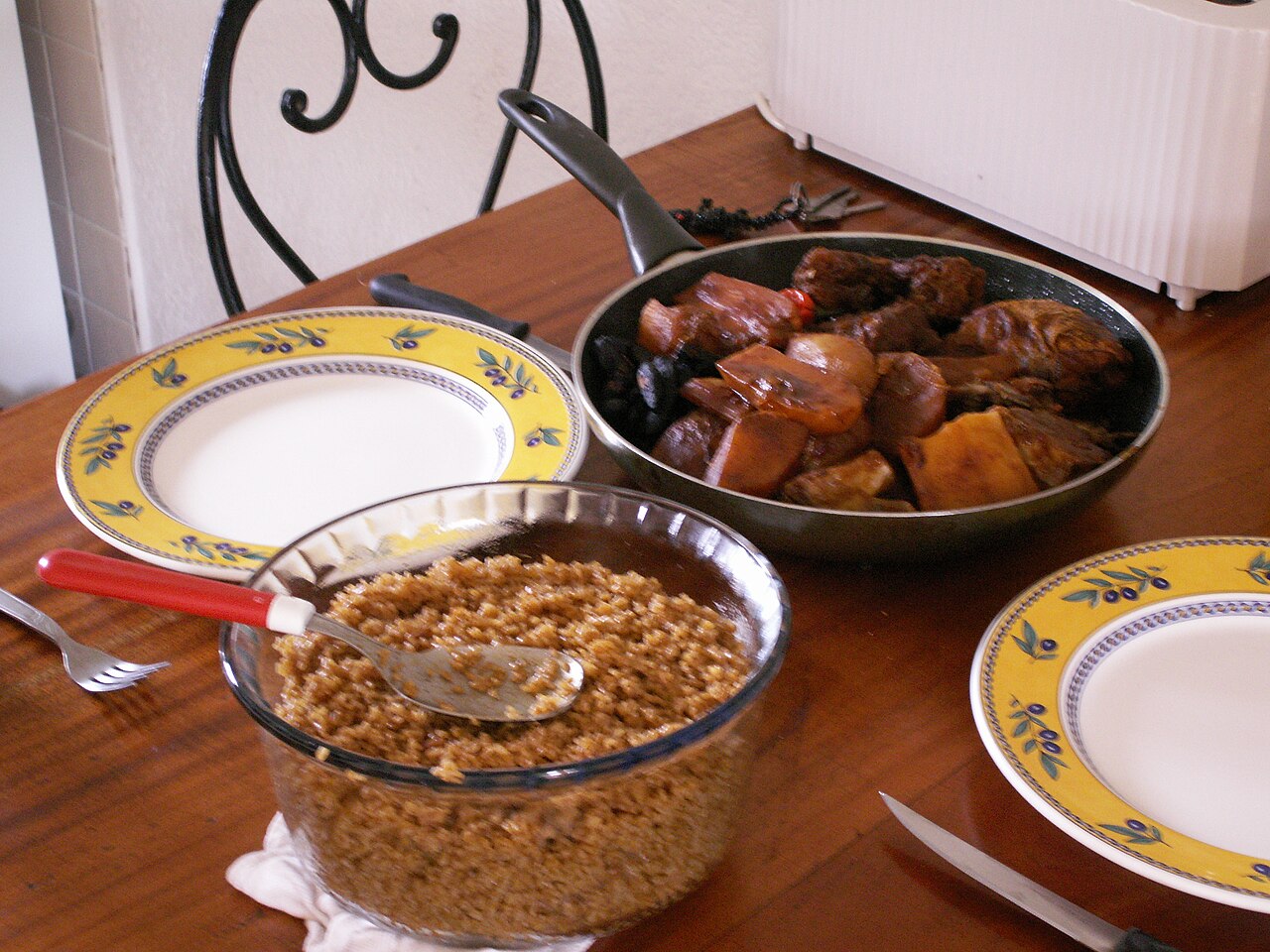
The national dish: fish stuffed with a paste of parsley, garlic and chilli, cooked in a tomato sauce with vegetables such as cabbage, carrot, cassava, aubergine and sweet potato, and then broken rice cooked in the same rich sauce. The fish and vegetables are piled on top of the red rice.
Ingredients
- 1.2 kg firm white fish steaks, such as grouper, sea bass or hake
- A large bunch of parsley, 4 cloves garlic, 1 small chilli and 2 spring onions, for the stuffing
- 100 ml vegetable or peanut oil
- 2 onions, chopped
- 140 g tomato paste
- 1 small cabbage, cut into quarters
- 2 carrots, 1 small cassava or 1 sweet potato, 1 aubergine and 1 small squash, cut into large pieces
- 1 whole scotch bonnet chilli (optional)
- 600 g broken rice (or long-grain rice, rinsed)
- 1 lime, and salt and black pepper
Method
- Blend the parsley, garlic, chilli and spring onions with a pinch of salt and pepper. Cut small slits in the fish and push some of the paste into them.
- Heat the oil in a large, heavy pot and brown the fish on both sides for a few minutes. Lift it out and set it aside.
- Fry the onions in the same oil until soft, add the tomato paste and any leftover herb paste and fry for 5 minutes, stirring. Add about 2 litres of water and bring to the boil.
- Add the harder vegetables (cabbage, carrots, cassava) and the whole chilli, simmer for 20 minutes, then add the fish and softer vegetables and cook for 20 minutes more. Lift out the fish and vegetables, cover and keep warm.
- Measure the sauce: you need about 1.2 litres for the rice (add water if needed). Add the rice, cover tightly and cook on a low heat for 25 to 30 minutes, until tender. A crisp layer at the bottom of the pot, called xoon, is a treat.
- Spread the red rice on a large platter, arrange the fish and vegetables on top, and serve with lime wedges.
Made it at home? Tick it off and it goes into your kitchen passport.
In 2021 UNESCO added 'Ceebu jën, a culinary art of Senegal' to its list of the Intangible Cultural Heritage of Humanity. Its name simply means 'rice and fish' in Wolof.
 Take the trip to Senegal