World Stroll
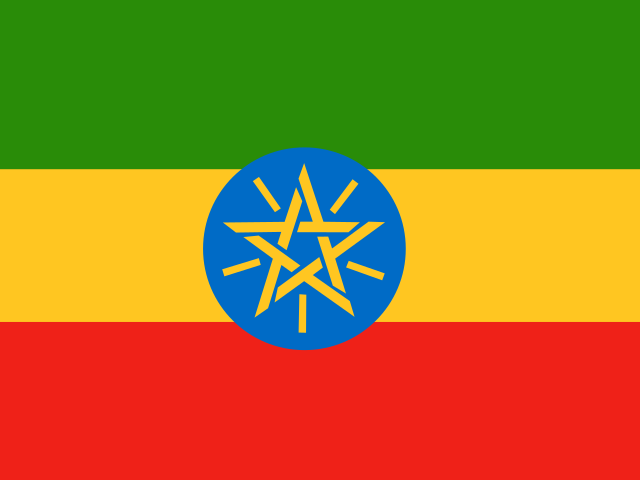
Flag of Ethiopia
Travel guide

Learn Ethiopia before you go

Churches carved out of solid rock, a calendar with thirteen months, the home of the wild coffee plant, and injera shared from one great platter.
Take the full trip
CapitalAddis Ababa
CurrencyEthiopian birr (ETB)
Official languageAmharic was the only working language of the federal government until 2020; Afaan Oromo, Tigrinya, Somali and Afar have since been added. Each region also chooses its own working language
Drives on theRight
Calling code+251

10 phrases to learn

In Amharic (አማርኛ). Capital letters show the stressed part. Tap the heart to practise a phrase later.

Tena yistilign (ጤና ይስጥልኝ)
TEH-nah yis-TIL-lin
Hello (polite; literally 'may God give you health for me')
A respectful greeting for older people and anyone you do not know
Selam (ሰላም)
seh-LAHM
Hello (literally 'peace')
The everyday greeting, at any time of day
Endemin neh? / Endemin nesh? (እንደምን ነህ? / እንደምን ነሽ?)
en-deh-MIN neh / en-deh-MIN nesh
How are you? (to a man / to a woman)
After the greeting, before any business
Dehna negn (ደህና ነኝ)
DEH-nah NEN
I'm fine
Answering 'how are you?'
Egziabher yimesgen (እግዚአብሔር ይመስገን)
eg-zee-ah-BEHR yim-MES-gen
Thanks be to God
The usual reply to 'how are you?', used by Christians and often by Muslims too
Ameseginalehu (አመሰግናለሁ)
ah-meh-seg-NAH-leh-hoo
Thank you
Thanking anyone, for anything
Ebakih / Ebakish (እባክህ / እባክሽ)
eh-BAH-kih / eh-BAH-kish
Please (to a man / to a woman)
Asking for something politely
Yikirta (ይቅርታ)
yih-KIR-tah
Sorry; excuse me
Apologising, or getting past someone in a crowd
Sime ... new (ስሜ ... ነው)
SIH-meh ... NOH
My name is ...
Introducing yourself
Sint new? (ስንት ነው?)
SINT NOH
How much is it?
Asking a price at the market

At the table

  • Wash your hands before the meal. In many homes a jug of water and a basin are brought to you at the table.
  • Eat with your right hand only. Tear off a piece of injera, use it to pinch up some stew, and eat from the part of the shared platter in front of you.
  • Your host may lift a rolled mouthful to your lips. This is gursha, a sign of friendship and respect, and it is polite to accept it; you may return the gesture.
  • Wait for the host or the eldest person to begin. In many Christian and Muslim homes a short prayer is said first.
  • Many Orthodox Christians eat no meat, eggs or dairy on Wednesdays, Fridays and during Lent, and Muslims and Orthodox Christians do not eat pork. Ask before you bring food as a gift.
  • If you are invited to a coffee ceremony, take your time: it can last an hour, and it is polite to stay for more than one cup.

Local tips

Check official travel advice first

As of September 2026 fighting has broken out again in parts of northern Ethiopia, including the Tigray, Afar and Amhara regions, where many of the most famous sites lie, and some other areas are also unsafe. Before planning a trip, and again before you travel, read your own government's official travel advice for Ethiopia and follow it.

Ask which clock is meant

Because many Ethiopians count the hours from dawn, '3 o'clock' can mean 9 in the morning. When you book a bus, a tour or a meeting, ask whether the time is in Ethiopian time or in 'foreign' time.

Remember the Ethiopian calendar

Dates on tickets, receipts and official papers may be written in the Ethiopian calendar, which is 7 or 8 years behind the Western one and starts the year on 11 September. If a date looks strange, ask.

Take the altitude slowly

Addis Ababa lies at about 2,355 m and many other towns are just as high. Walk slowly for the first days, drink plenty of water, and remember that the sun is strong even when the air feels cool; evenings can be cold.

Plan around the rains

In the highlands the main rains usually fall from June to September, and the dry season from October to February is the most popular time to visit. The big festivals of Enkutatash and Meskel fall in September, as the rains end.

Visiting churches and mosques

Take off your shoes before entering an Orthodox church or a mosque, and dress modestly with shoulders and knees covered. In Orthodox churches women usually cover their hair and may be asked to use a separate entrance. Always ask before photographing priests, pilgrims or anyone else.

Fasting days are good news for vegetarians

On Wednesdays, Fridays and during the long fasts, many restaurants serve 'yetsom' (fasting) food with no meat, eggs or dairy. Ask for beyaynetu for a colourful platter of vegetable dishes.

Money and water

Ethiopia's currency, the birr, has been allowed to float since 2024, so exchange rates change often; change money at banks or official exchange offices. Carry cash outside the big cities, and drink bottled or treated water.

Dishes to try

  • Injera (እንጀራ): A large, round sourdough flatbread with a spongy surface full of tiny holes, made from teff flour and water left to ferment for several days. It is cooked on one side only on a wide clay plate called a mitad. Injera is both the plate and the cutlery: stews are served on top of it, and more injera is rolled up on the side for scooping.
  • Doro wat (ዶሮ ወጥ): A deep red, spicy chicken stew made with a large amount of slowly cooked onions, berbere and spiced butter, with whole hard-boiled eggs added at the end. It is the dish of feast days, above all Christmas and Easter, when the long fast ends, and many people call it the national dish.
  • Misir wat (ምስር ወጥ): Split red lentils cooked with onions, garlic and berbere into a thick, spicy stew. Made with oil instead of butter, it contains no animal products, so it is one of the most popular dishes on the many fasting days.
  • Shiro (ሽሮ): A smooth, thick stew made from powdered chickpeas or broad beans, cooked with onions, garlic and spices. It is cheap, quick and filling, eaten in homes every day, and often brought to the table still bubbling in a small clay pot.
  • Tibs (ጥብስ): Pieces of beef, lamb or goat quickly fried with onions, green chillies, butter and sometimes rosemary. It can be mild or hot, and is often brought to the table sizzling in a small clay dish over coals.
  • Kitfo (ክትፎ): Finely minced beef mixed with a hot chilli powder called mitmita and warm spiced butter. It is traditionally eaten raw, served with mild fresh cheese, chopped greens and injera or kocho, a bread made from the false banana plant. Kitfo is a favourite for holidays such as Meskel.
  • Beyaynetu (በያይነቱ): A large round of injera covered with small heaps of many different dishes: lentils, split peas, shiro, cabbage, greens, beetroot and more. The fasting version has no animal products at all, which makes it a favourite of vegetarians and vegans visiting Ethiopia.
  • Firfir (ፍርፍር): A popular breakfast of torn pieces of injera or bread fried with spiced butter, berbere and onions, or mixed with leftover wat. It is a good way to use yesterday's injera and is often eaten with a spoon.

Cities to see

  • Addis Ababa (capital): The National Museum, with a replica of Lucy, Holy Trinity Cathedral, Merkato, a huge open-air market.
  • Aksum: The stelae fields and the Obelisk of Aksum, The Church of Our Lady Mary of Zion, Ancient royal tombs.
  • Mekelle: The palace of Emperor Yohannes IV, Salt caravans from the Danakil, Rock-cut churches in the countryside around it.
  • Gondar: The castles of Fasil Ghebbi, The painted ceiling of Debre Berhan Selassie church, The bath of Fasilides, used for Timkat.
  • Lalibela: The rock-hewn churches, Christmas (Genna) pilgrimages, Mountain views and monasteries nearby.
  • Bahir Dar: Lake Tana and its monasteries, The Blue Nile Falls nearby, Papyrus boats called tankwa.

Landmarks and the city map are on the Ethiopia trip